



Proton Pump
Proton pump is an integral membrane protein that is capable of moving protons across a biological membrane. Mechanisms are based on conformational changes of the protein structure or on theQ cycle. In cell respiration, the proton pump uses energy to transport protons from the matrix of the mitochondrion to the inter-membrane space. It is an active pump, that generates a protonconcentration gradient across the inner mitochondrial membrane, because there are more protons outside the matrix than inside. The difference in pH and electric charge (ignoring differences inbuffer capacity) creates an electrochemical potential difference that works similar to that of a battery or energy storing unit for the cell. The process could also be seen as analogous to cycling uphill or charging a battery for later use, as it produces potential energy. The proton pump does not create energy, but forms a gradient that stores energy for later use.
All Product Categories
-
Proton Pump Related Products (187)
Related Products (187)

-
Antibodies (1)
-
Lansoprazole-d4
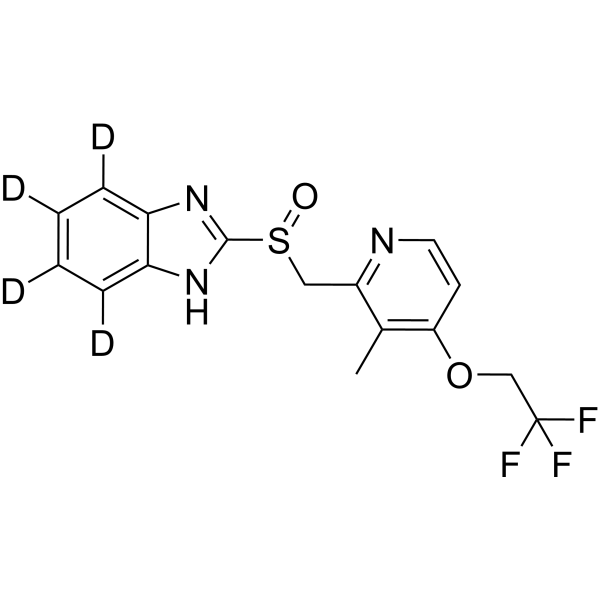 0 ImagesSynonyms: AG-1749-d4Lansoprazole-d4 (AG-1749-d4) is a deuterium labeled Lansoprazole. Lansoprazole is a proton pump inhibitor which prevents the stomach from producing acid.
-
Saviprazole
 0 ImagesCat. No.: HY-101646CAS No.: 121617-11-6Synonyms: HOE-731Saviprazole (HOE-731) is a H+,K+-ATPase inhibitor. Saviprazole inhibits gastric acid secretion. Saviprazole inhibits histamine- and dbcAMP-stimulated [14C]aminopyrine uptake, dbcAMP-induced oxygen consumption. Saviprazole can be used in research related to gastrointestinal diseases, such as gastric ulcers and acid reflux.
-
Esomeprazole-d3
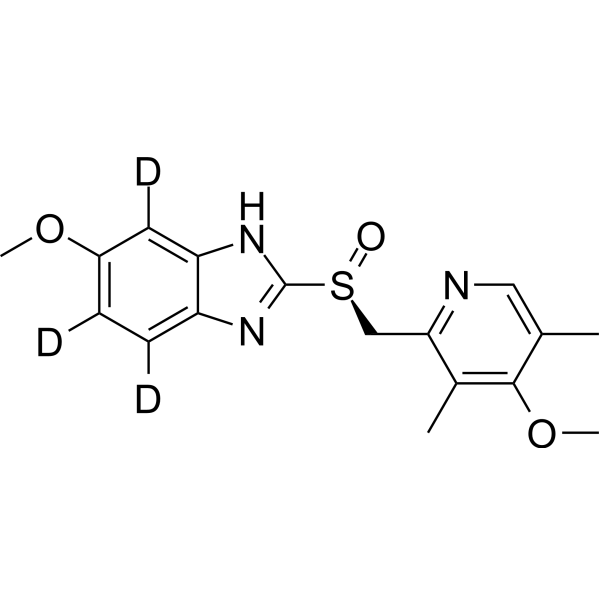 0 ImagesCat. No.: HY-17021S1Synonyms: (S)-Omeprazole-d3; (-)-Omeprazole-d3Esomeprazole-d3 is deuterium labeled Esomeprazole. Esomeprazole ((S)-Omeprazole) is a potent and orally active proton pump inhibitor and reduces acid secretion through inhibition of the H+, K+-ATPase in gastric parietal cells. Esomeprazole has the potential for symptomatic gastroesophageal reflux disease research.
-
(R)-Lansoprazole-d4
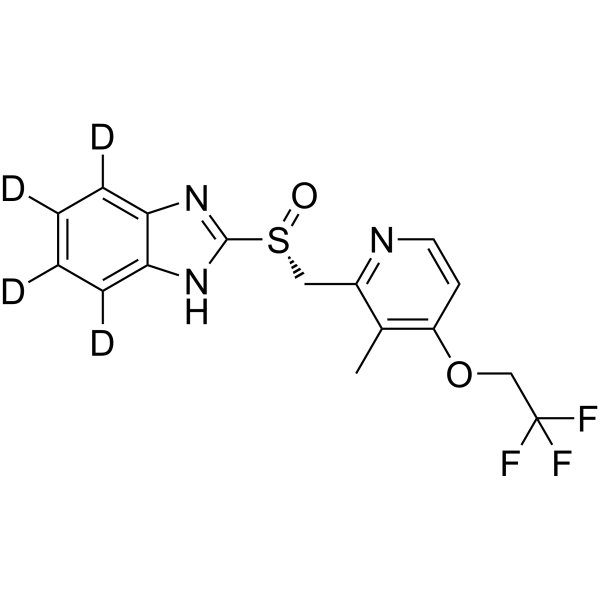 0 ImagesCat. No.: HY-13662BSPurity: 99.13%Synonyms: Dexlansoprazole-d4(R)-Lansoprazole-d4 is deuterium labeled (R)-Lansoprazole. (R)-Lansoprazole is the R enantiomer of Lansoprazole, Lansoprazole (AG 1749) is an orally active proton pump inhibitor which prevents the stomach from producing acid. Lansoprazole (AG 1749) is a potent brain penetrant neutral sphingomyelinase (N-SMase) inhibitor (exosome inhibitor).
-
Rabeprazole-d4
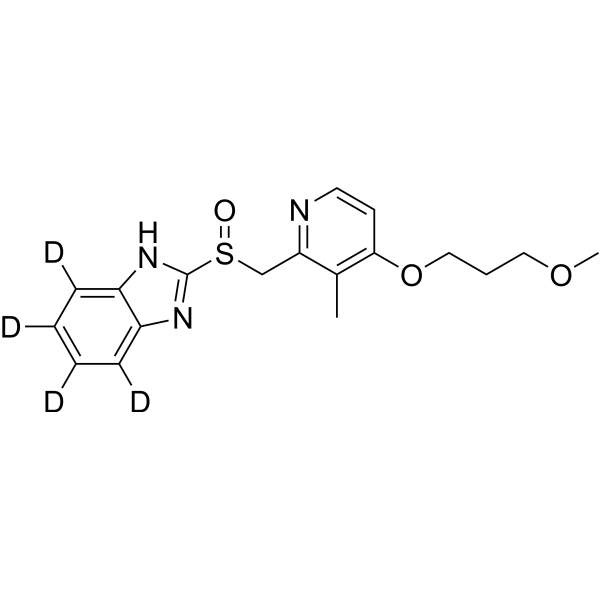 0 ImagesCat. No.: HY-B0656SCAS No.: 934295-48-4Synonyms: LY307640-d4Rabeprazole-d4 is a deuterium labeled Rabeprazole. Rabeprazole is a second-generation proton pump inhibitor (PPI) that irreversibly inactivates gastric H+/K+-ATPase. Rabeprazole induces apoptosis. Rabeprazole acts as an uridine nucleoside ribohydrolase (UNH) inhibitor with an IC50 of 0.3 μM. Rabeprazole can be used for the research of gastric ulcerations and gastroesophageal reflux.
-
Corza6
 0 ImagesCat. No.: HY-P10817Corza6 is a potent and selective human voltage-gated proton channel (hHv1) peptide inhibitor. Corza6 binds to the external voltage sensor domain (VSD) loop in hHv1 with a Kd of ~1 nM at the natural, hyperpolarized resting membrane potential (RMP) of mammalian cells. Corza6 allows capacitation in sperm and permits sustained reactive oxygen species (ROS) production in white blood cells (WBCs).
-
Manzamine A
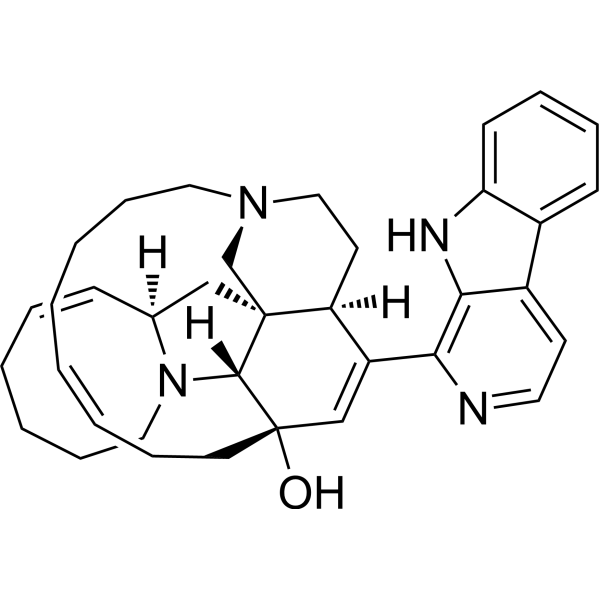 0 ImagesSynonyms: Keramamine AManzamine A, an orally active beta-carboline alkaloid, inhibits specifically GSK-3β and CDK-5 with IC50s of 10.2 μM and 1.5 μM, respectively. Manzamine A targets vacuolar ATPases and inhibits autophagy in pancreatic cancer cells. Manzamine A has antimalarial and anticancer activities. Manzamine A also shows potent activity against HSV-1.
-
Corza6 TFA
 0 ImagesCat. No.: HY-P10817ACorza6 TFA is a potent and selective human voltage-gated proton channel (hHv1) peptide inhibitor. Corza6 TFA binds to the external voltage sensor domain (VSD) loop in hHv1 with a Kd of ~1 nM at the natural, hyperpolarized resting membrane potential (RMP) of mammalian cells. Corza6 TFA allows capacitation in sperm and permits sustained reactive oxygen species (ROS) production in white blood cells (WBCs).
-
Lansoprazole sulfone
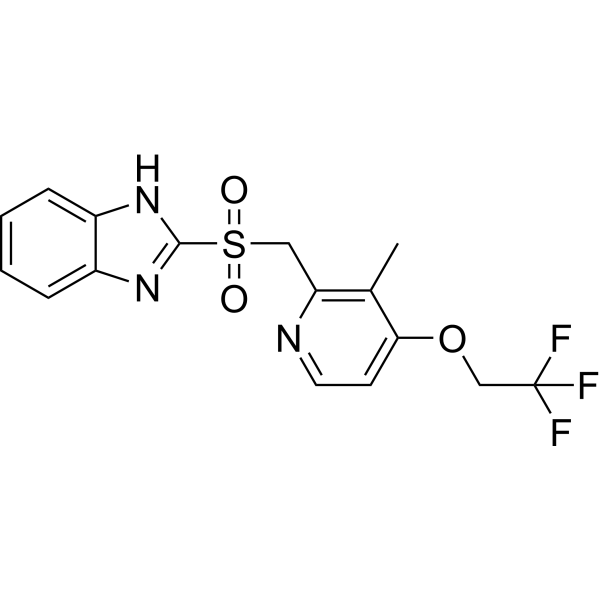 0 ImagesSynonyms: AG-1813Lansoprazole sulfone (AG-1813) is an orally active and selective inhibitor of H+, K+-ATPase. Lansoprazole sulfone can significantly stimulates gastric acid secretion by inhibiting H+, K+-ATPase. Lansoprazole sulfone has potential applications in duodenal ulcer, gastric ulcer, gastroesophageal reflux disease and Zolinger Ellison disease.
-
Esomeprazole (Standard)
 0 ImagesSynonyms: (S)-Omeprazole (Standard); (-)-Omeprazole (Standard)Esomeprazole (Standard) is the analytical standard of Esomeprazole. This product is intended for research and analytical applications. Esomeprazole ((S)-Omeprazole) is a potent and orally active proton pump inhibitor and reduces acid secretion through inhibition of the H+, K+-ATPase in gastric parietal cells. Esomeprazole has the potential for symptomatic gastroesophageal reflux disease research.
-
Lansoprazole sodium
 0 ImagesSynonyms: AG-1749 sodiumLansoprazole sodium (AG 1749 sodium) is an orally active proton pump inhibitor which prevents the stomach from producing acid. Lansoprazole sodium (AG 1749 sodium) is a potent brain penetrant neutral sphingomyelinase (N-SMase) inhibitor (exosome inhibitor).
-
Zinc Pyrithione (Standard)
 0 ImagesZinc Pyrithione (Standard) is the analytical standard of Zinc Pyrithione. This product is intended for research and analytical applications. Zinc Pyrithione is an antifungal and antibacterial agent disrupting membrane transport by blocking the proton pump. Zinc Pyrithione is also a copper ionophore that delivers copper into cells and is a useful tool for studying cuproptosis.
-
Omeprazole magnesium
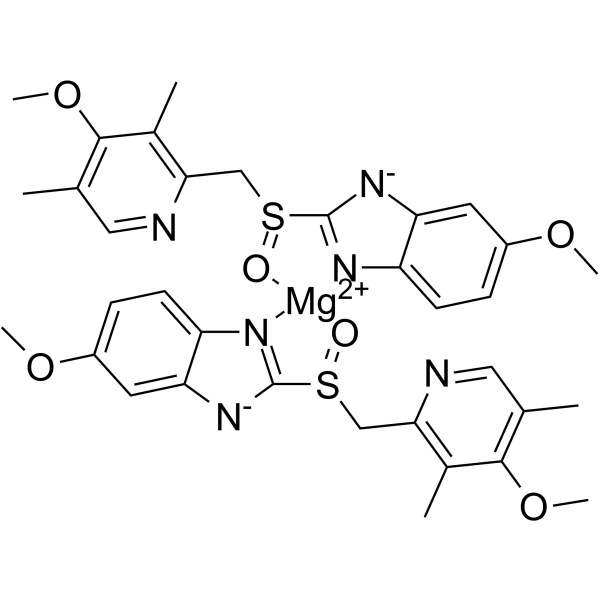 0 ImagesCat. No.: HY-109546CAS No.: 95382-33-5Omeprazole (H 16868) magnesium is an orally active H+,K+-ATPase inhibitor and a proton pump inhibitor. Omeprazole magnesium competitively inhibits CYP2C19, CYP3A4, and CYP2C9 activity. Omeprazole magnesium inhibits gastric acid secretion and can be used for acid-related gastrointestinal disorders. Omeprazole magnesium inhibits pancreatic cancer cell proliferation, induces apoptosis, autophagosome accumulation (elevated LC3-I and LC3-II levels), oxidative stress, and cytogenetic imbalance, modulates lysosomal transport, reduces inflammatory cytokines. Omeprazole magnesium alters small intestinal morphology and magnesium absorption, and induces gastric mucosa morphologic changes. Omeprazole magnesium aslo has neuroprotective and antibacterial effects.
-
Esomeprazole hemistrontium
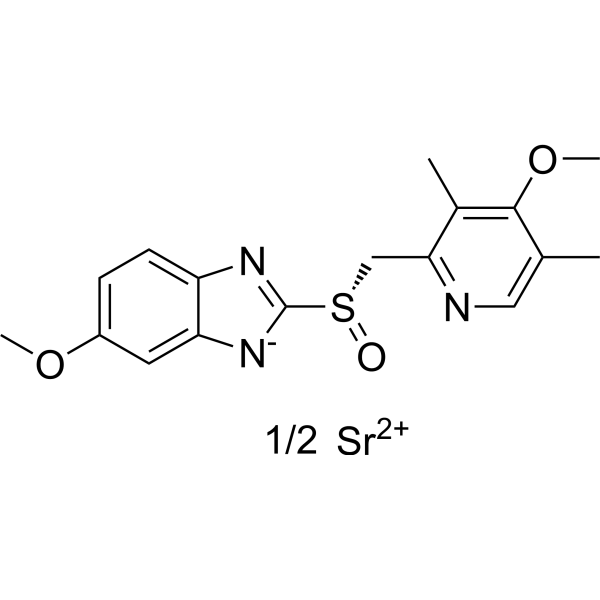 0 ImagesCat. No.: HY-17021CCAS No.: 914613-86-8Synonyms: (S)-Omeprazole hemistrontium; (-)-Omeprazole hemistrontiumEsomeprazole ((S)-Omeprazole) hemistrontium is a potent and orally active proton pump inhibitor and reduces acid secretion through inhibition of the H+, K+-ATPase in gastric parietal cells. Esomeprazole hemistrontium has the potential for symptomatic gastroesophageal reflux disease research.
-
Revaprazan
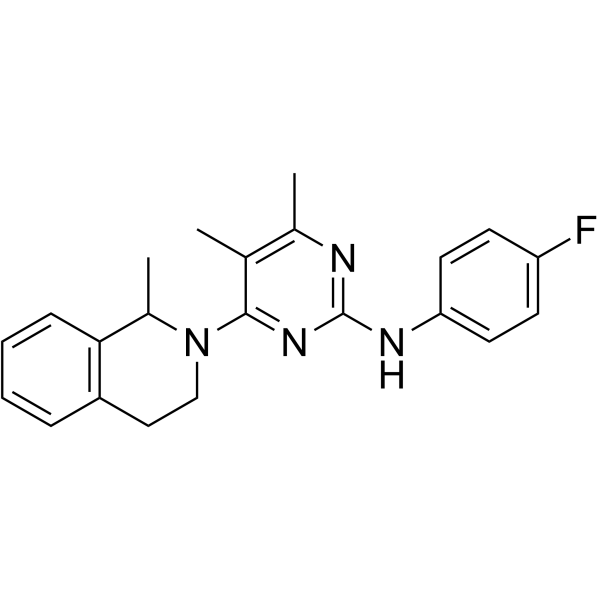 0 ImagesCat. No.: HY-121851CAS No.: 199463-33-7Synonyms: SB 641257Revaprazan (SB 641257) is reversible proton pump inhibitor. Revaprazan can inhibit gastric acid secretion and protect gastric mucosa. Revaprazan can inhibit IkappaB-alpha degradation as well as Akt inactivation, resulting in attenuation of H. pylori-induced COX-2 expression. Revaprazan can be used for the researches of infection and inflammmation, such as H. pylori-infected gastric inflammation and gastric ulcer.
-
Tegoprazan Benzoate
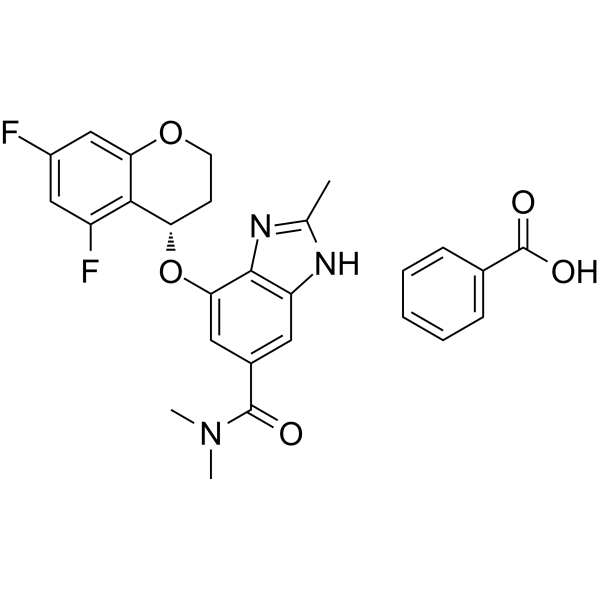 0 ImagesCat. No.: HY-17623DSynonyms: CJ-12420 Benzoate; RQ-00000004 BenzoateTegoprazan Benzoate is the benzoate form of Tegoprazan (HY-17623). Tegoprazan (CJ-12420), a potassium-competitive acid blocker, is a potent, oral active and highly selective inhibitor of gastric H+/K+-ATPase that could control gastric acid secretion and motility, with IC50 values ranging from 0.29-0.52 μM for porcine, canine, and human H+/K+-ATPases in vitro.
-
Linaprazan mesylate
 0 ImagesCat. No.: HY-100412ACAS No.: 855998-67-3Synonyms: AZD-0865 mesylateLinaprazan mesylate can inhibit H+,K+ -ATPase in the stomach through K+ competitive binding. (IC 50: 1.0 ± 0.2 μM), it has a strong inhibitory effect on acid. Linaprazan (AZD0865) mesylate can be used for research on reflux esophagitis with oral activity.
-
(R)-(+)-Pantoprazole-d6
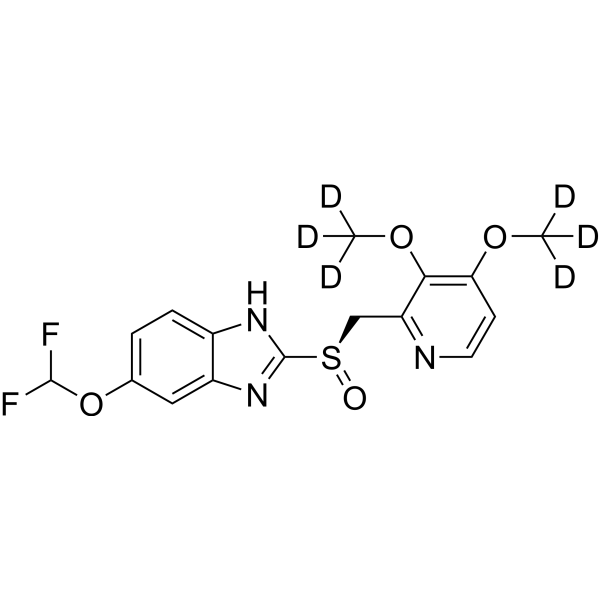 0 ImagesCat. No.: HY-17507CS(R)-(+)-Pantoprazole-d6 is deuterium labeled (R)-(+)-Pantoprazole.
-
Pantoprazole-d6
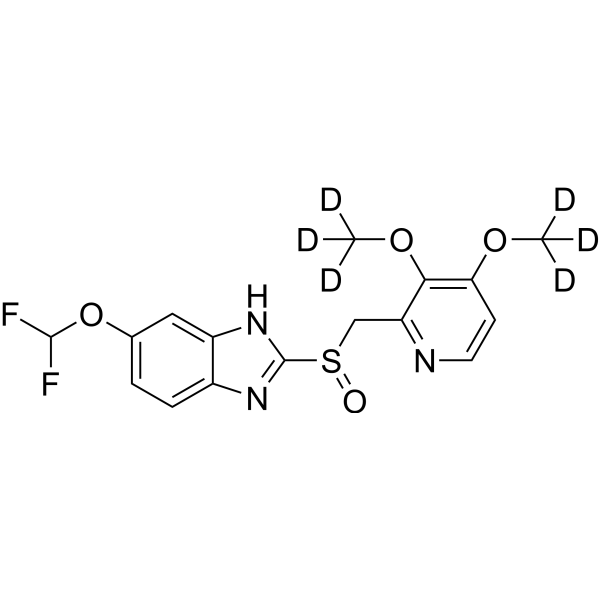 0 ImagesCat. No.: HY-17507SCAS No.: 922727-65-9Synonyms: BY1023-d6; SKF96022-d6Pantoprazole-d6 is deuterium labeled Pantoprazole. Pantoprazole (BY10232) is an orally active and potent proton pump inhibitor (PPI). Pantoprazole, a substituted benzimidazole, is a potent H+/K+-ATPase inhibitor with an IC50 of 6.8 μM. Pantoprazole improves pH stability and has anti-secretory, anti-ulcer activities. Pantoprazole significantly increased tumor growth delay combined with Doxorubicin (HY-15142).
-
Tiludronate disodium hemihydrate
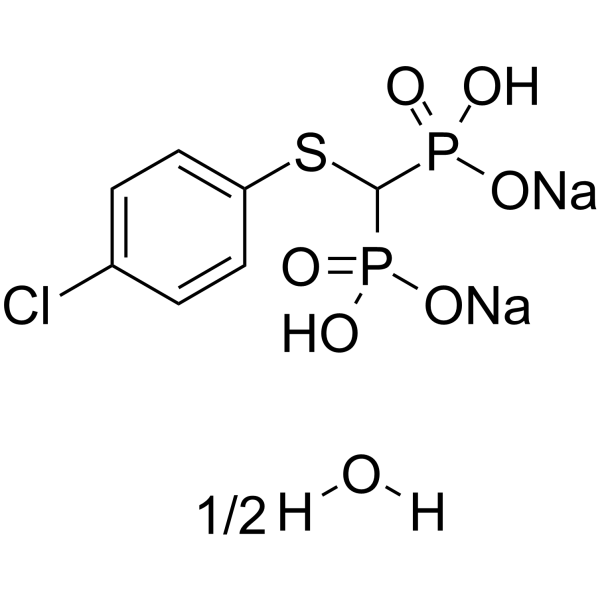 0 ImagesCat. No.: HY-A0213BCAS No.: 155453-10-4Synonyms: Tiludronic acid disodium hemihydrateTiludronate (Tiludronic Acid) disodium hemihydrate, an orally active bisphosphonate, can act an osteoregulator. Tiludronate disodium hemihydrate is used for the research of the metabolic bone disorders. Tiludronate disodium hemihydrate is a potent inhibitor of the osteoclast vacuolar H+-ATPase. Antiresorptive and anti-inflammatory properties.




